FOR IMMEDIATE RELEASE
October 8, 2026
Nantucket Shipwreck Is First in Massachusetts Tagged by the State Through New Archaeological Management Program
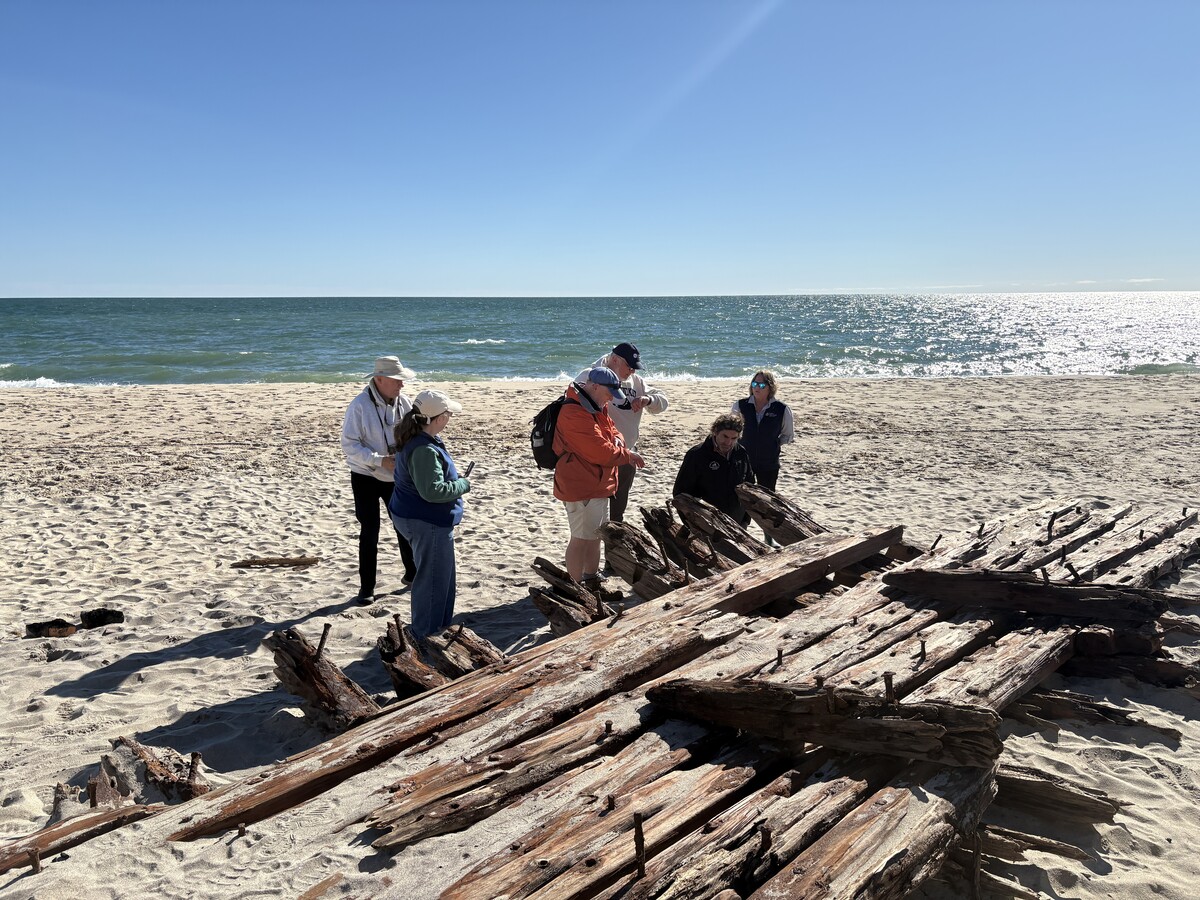
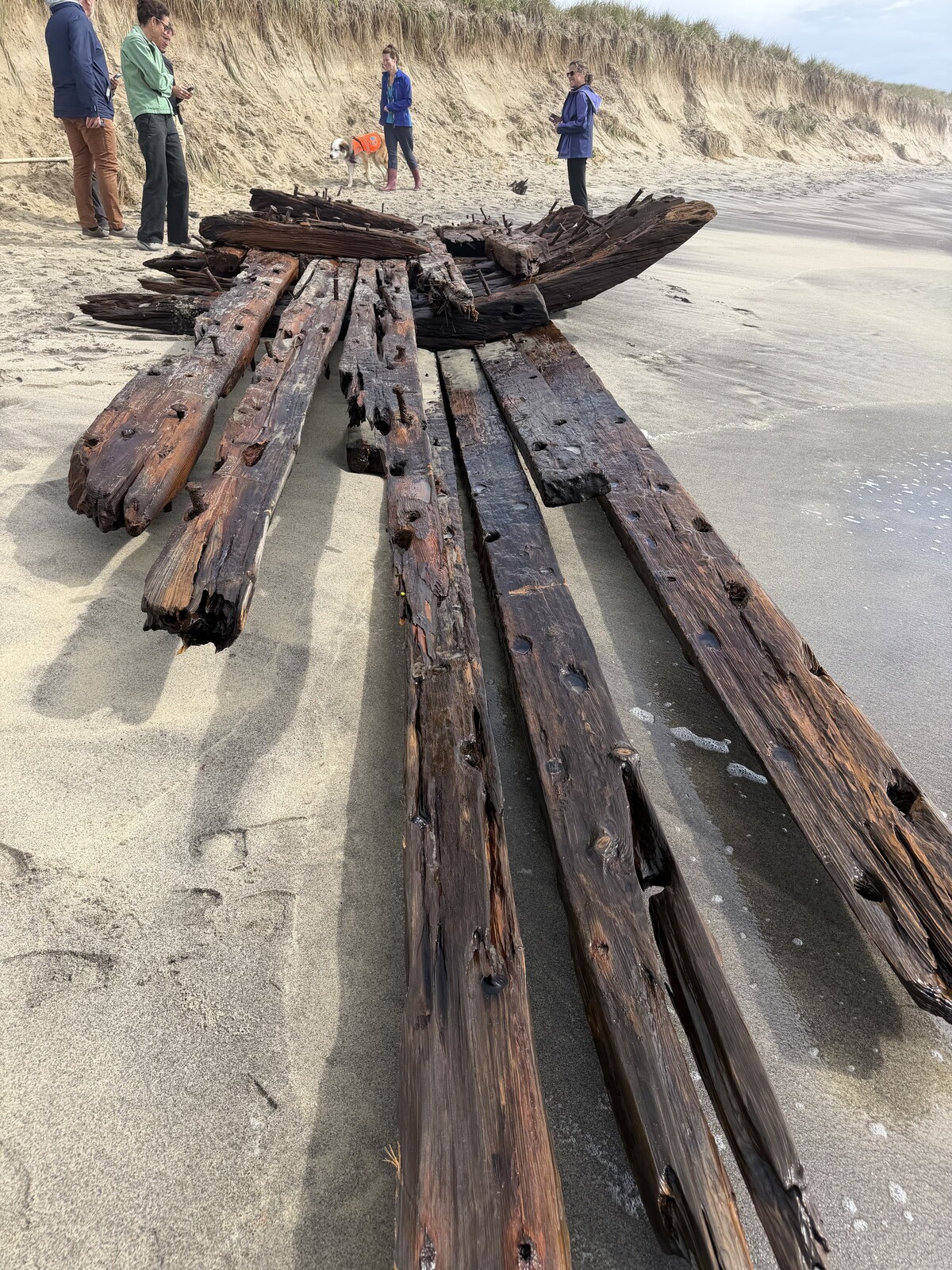
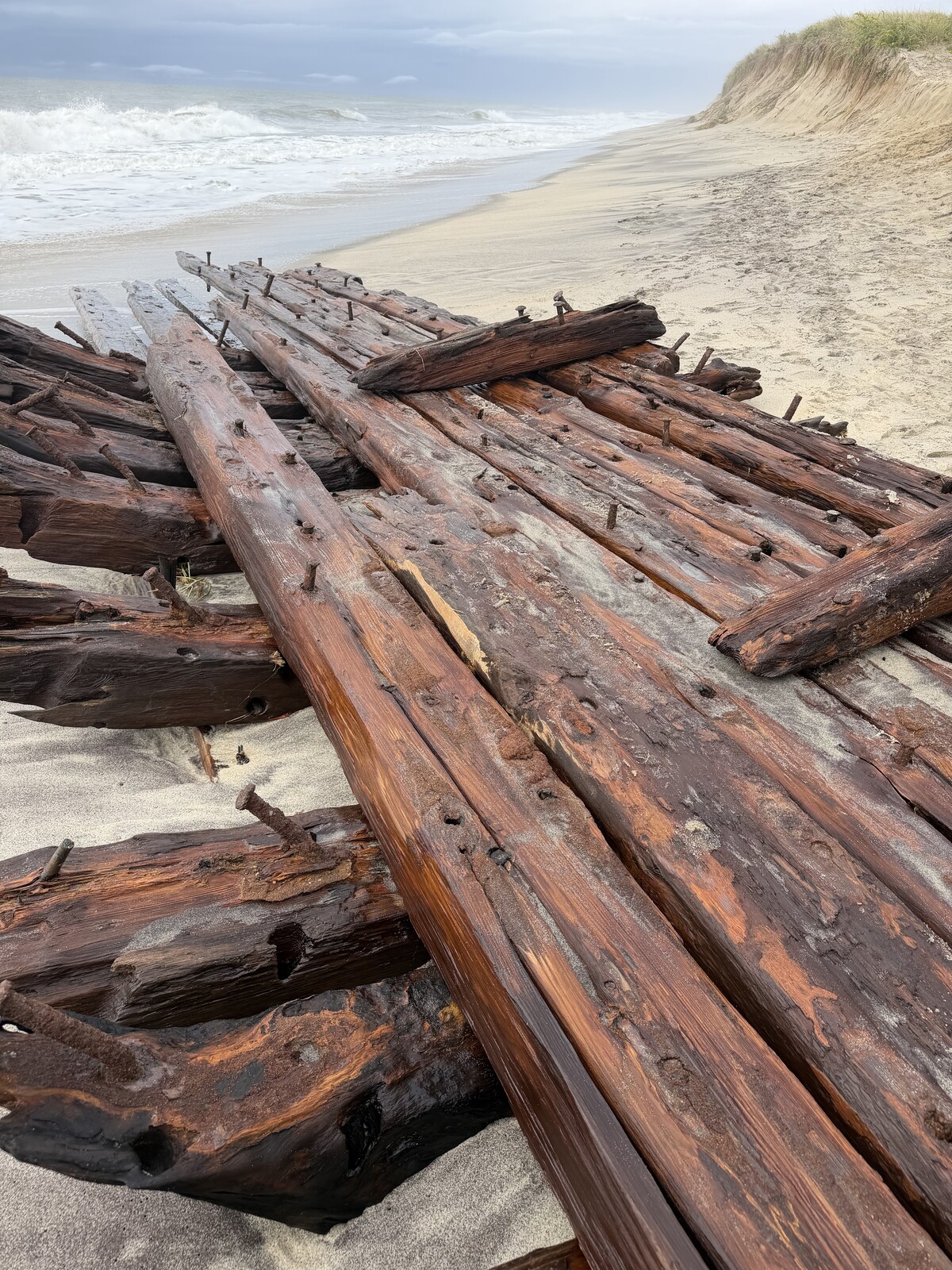
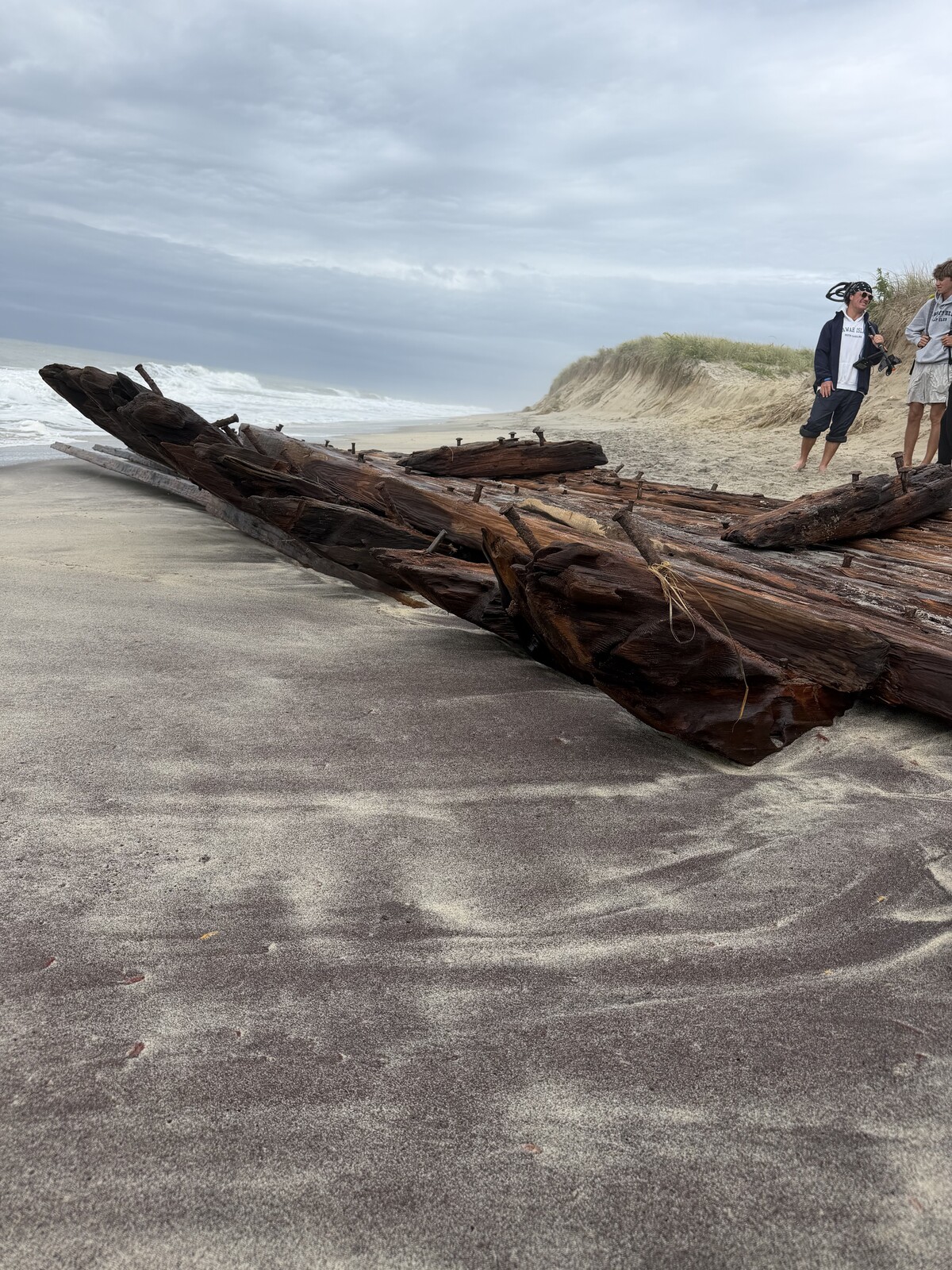
NANTUCKET, Mass. – Wreckage recently exposed along Nantucket’s South Shore has been determined to be distinct from wreckage documented by the Massachusetts Board of Underwater Archaeological Resources (BUAR) in 2022 and 2023, making it newly documented ship remains and the first in Massachusetts to be tagged by BUAR through the state’s Shipwreck Tagging Archaeological Management Program (STAMP).
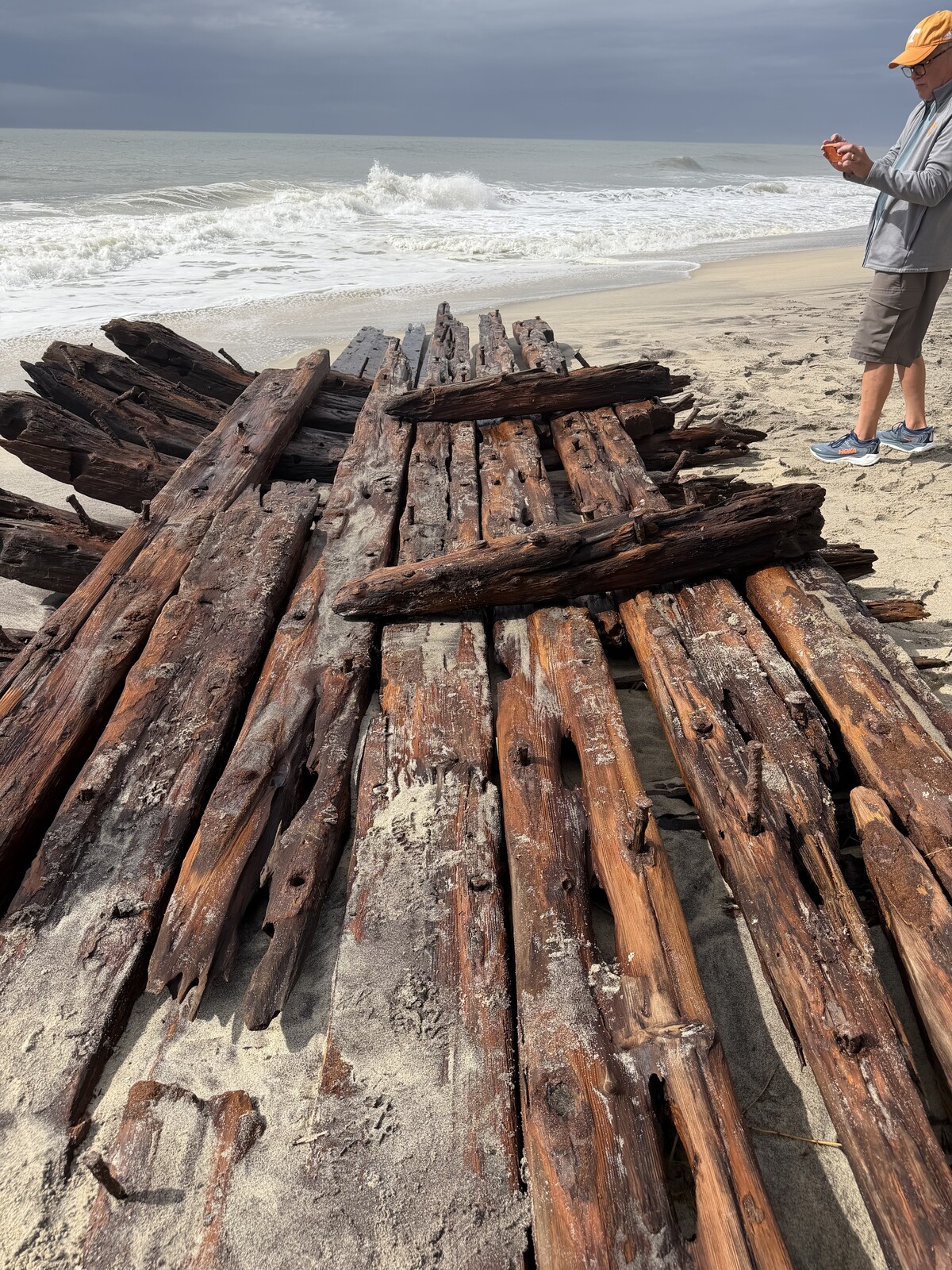
When the wreckage first emerged after the September nor’easter, initial speculation suggested it could be part of Warren Sawyer, a three-masted schooner that wrecked on Nantucket in 1884 and whose remains were documented nearby in 2022 and 2023.
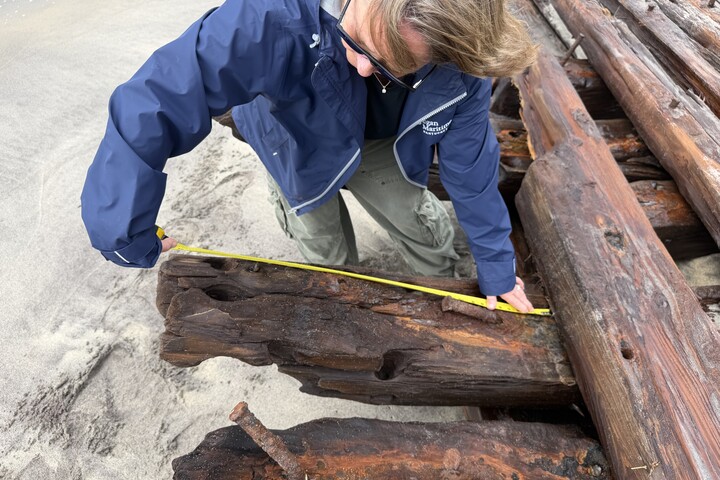
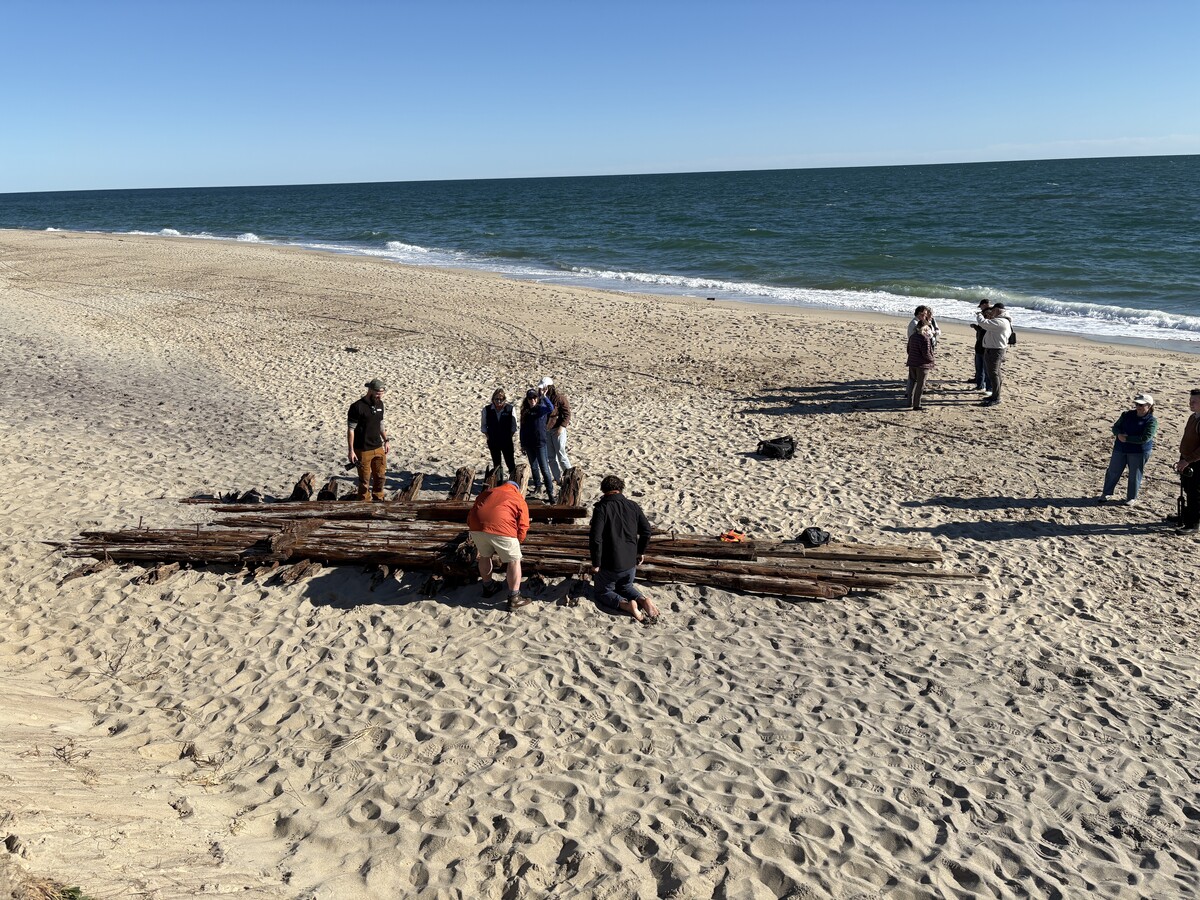
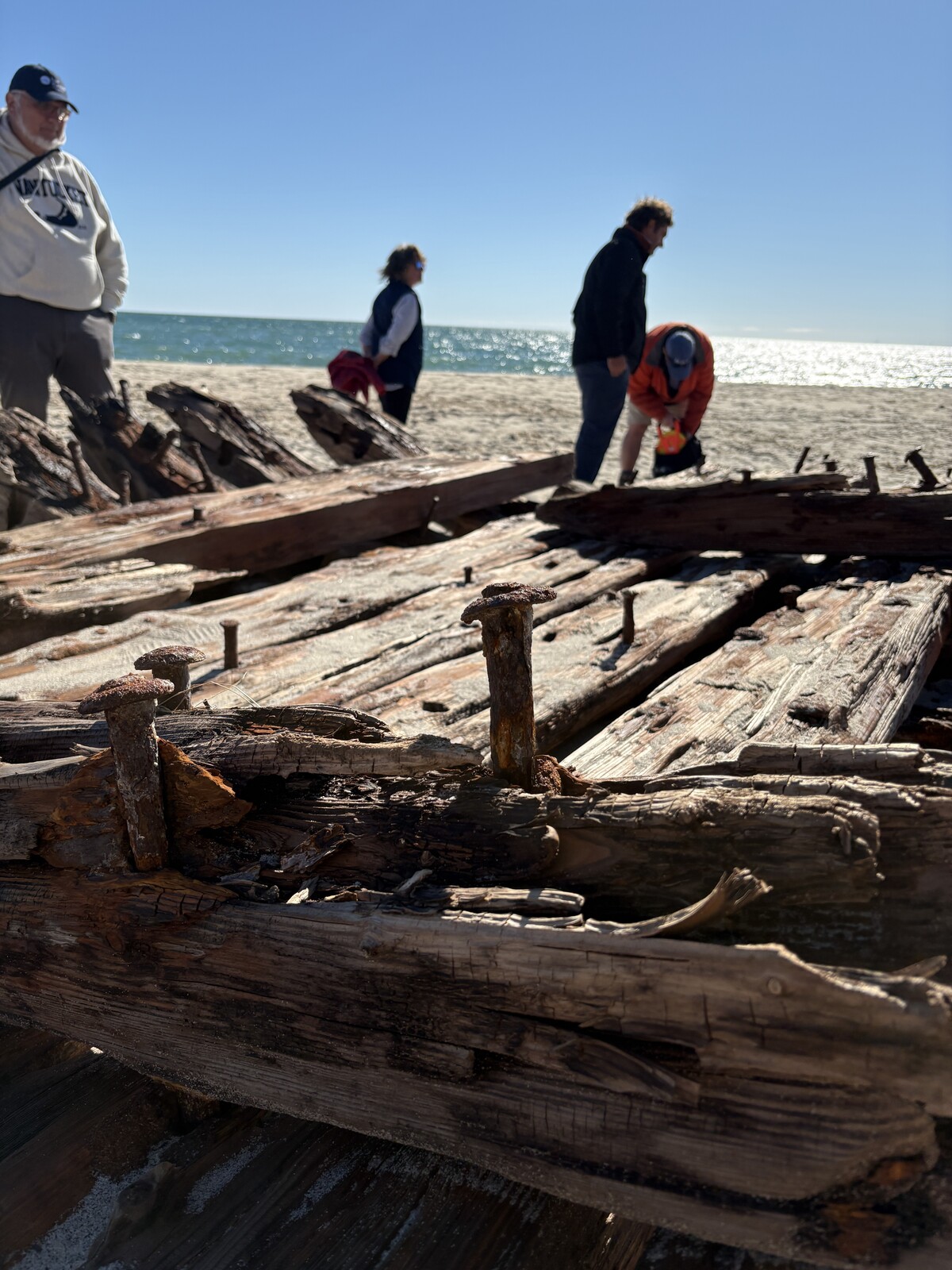
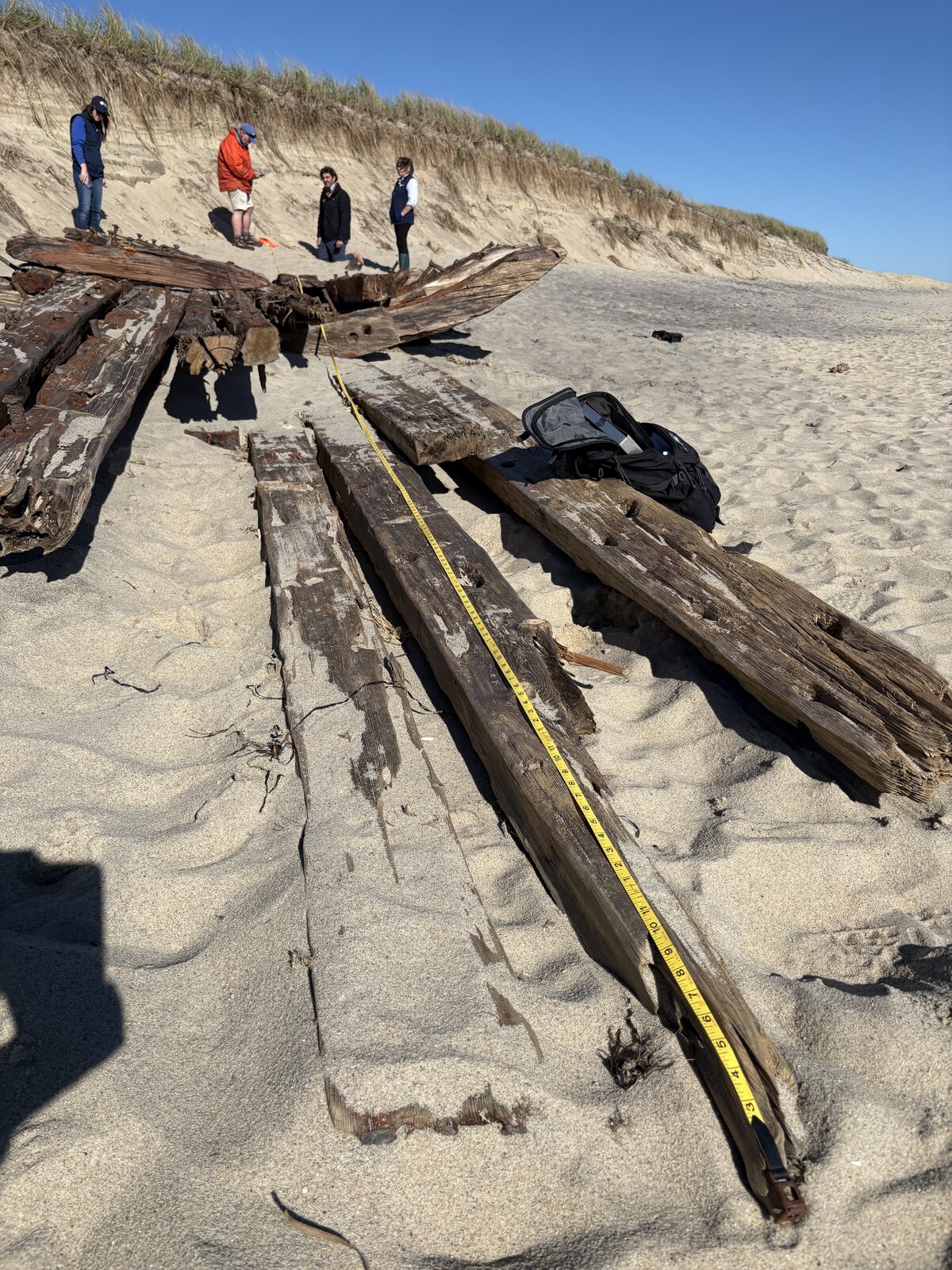
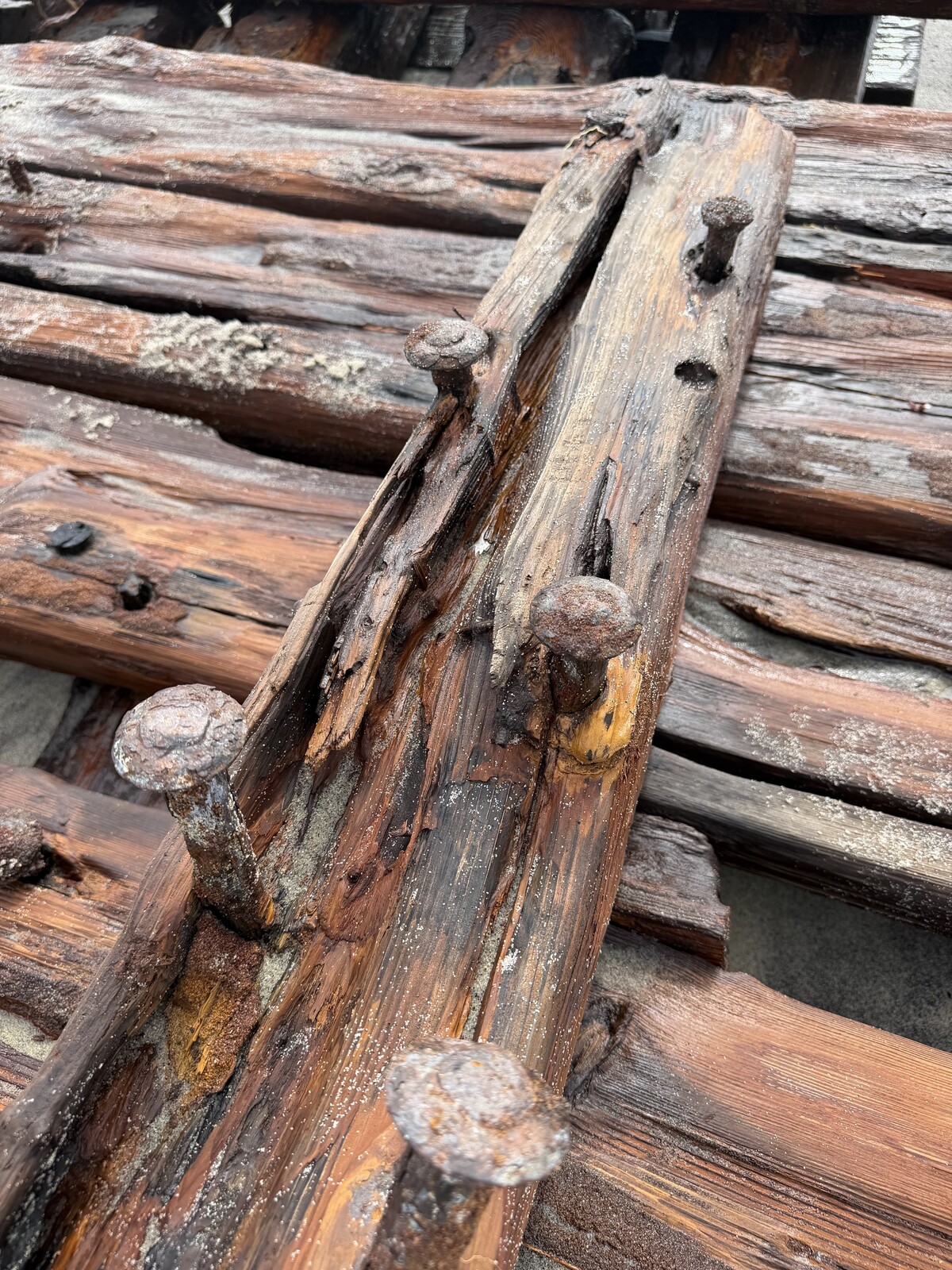
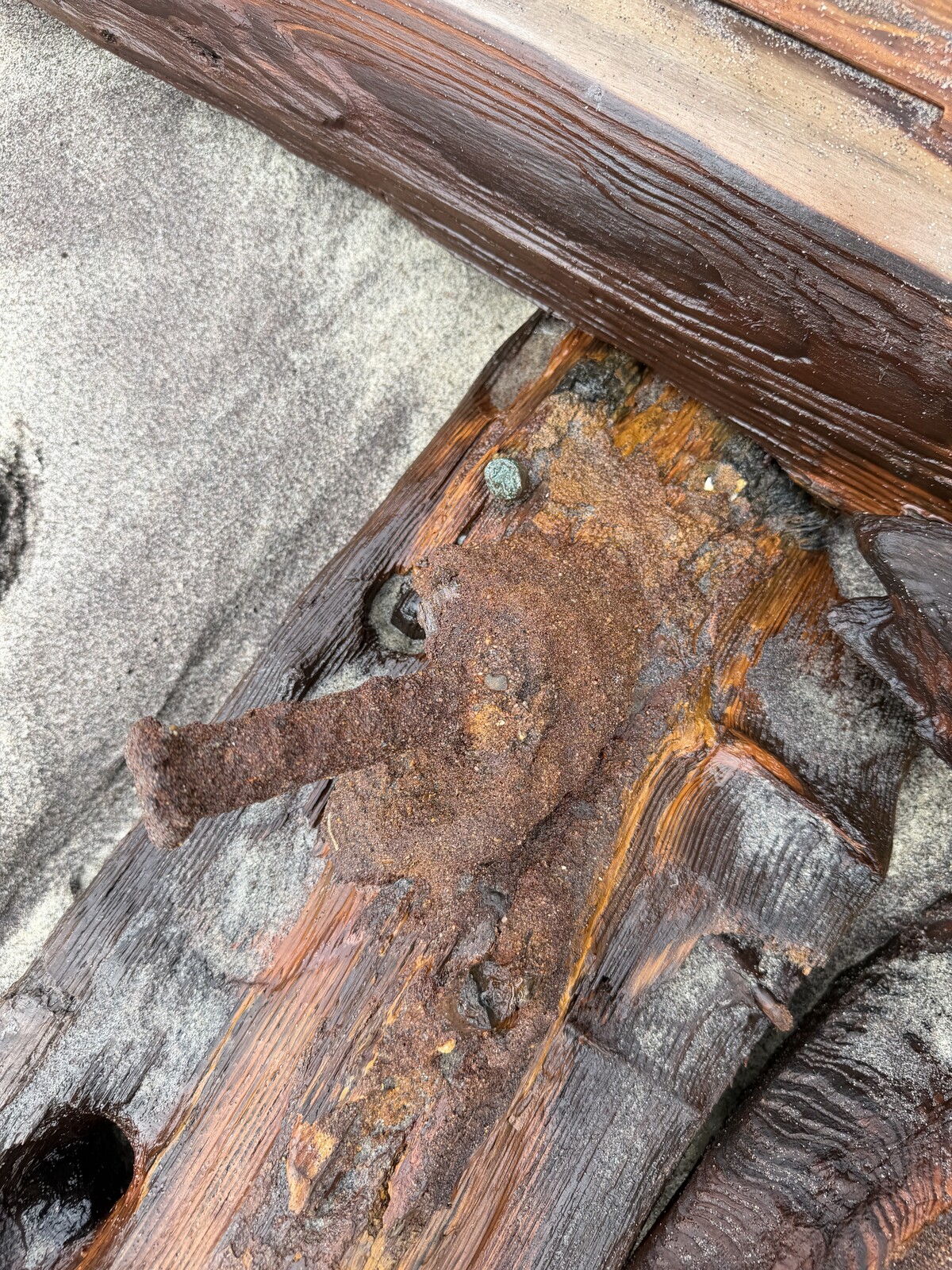
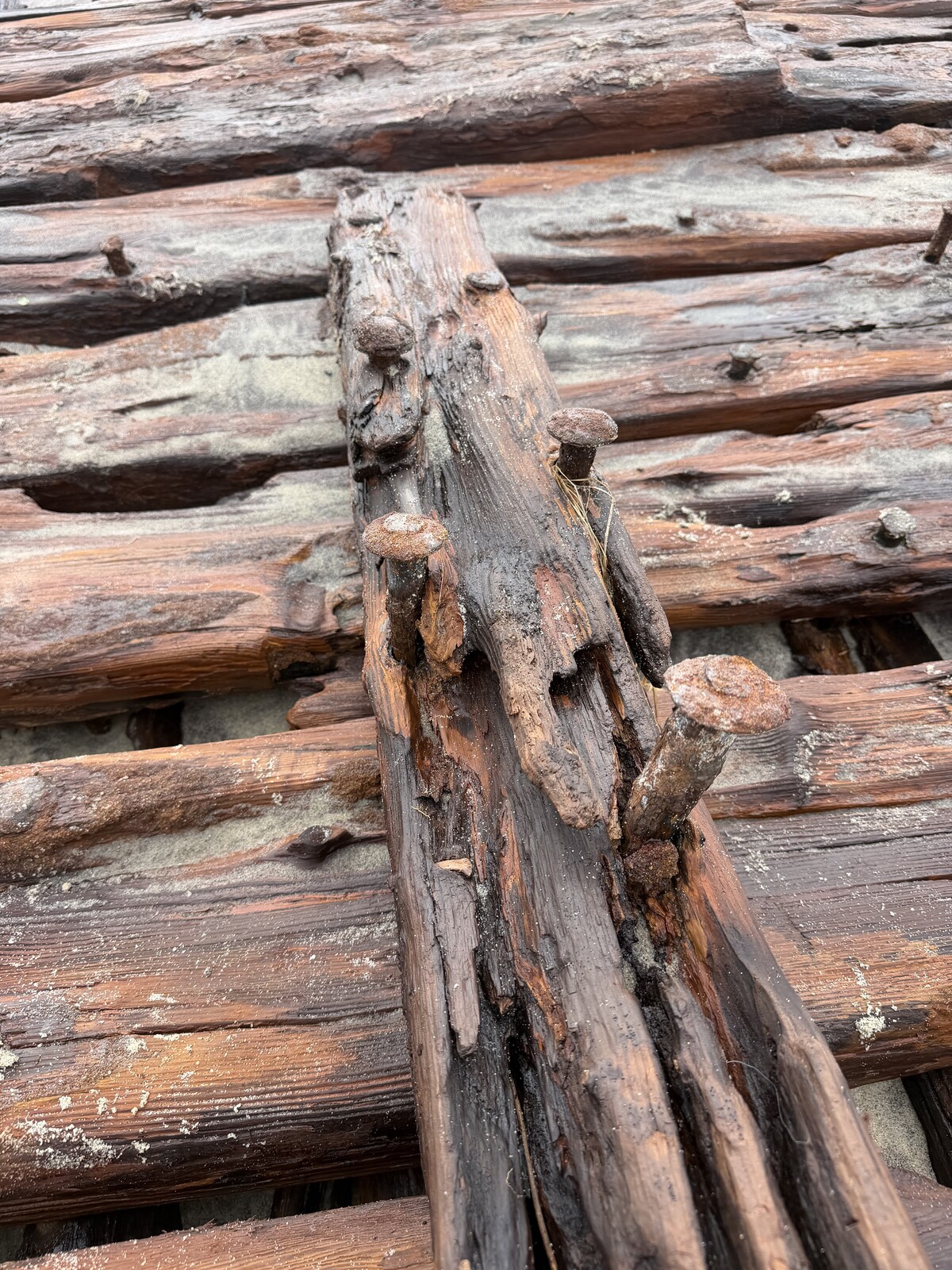
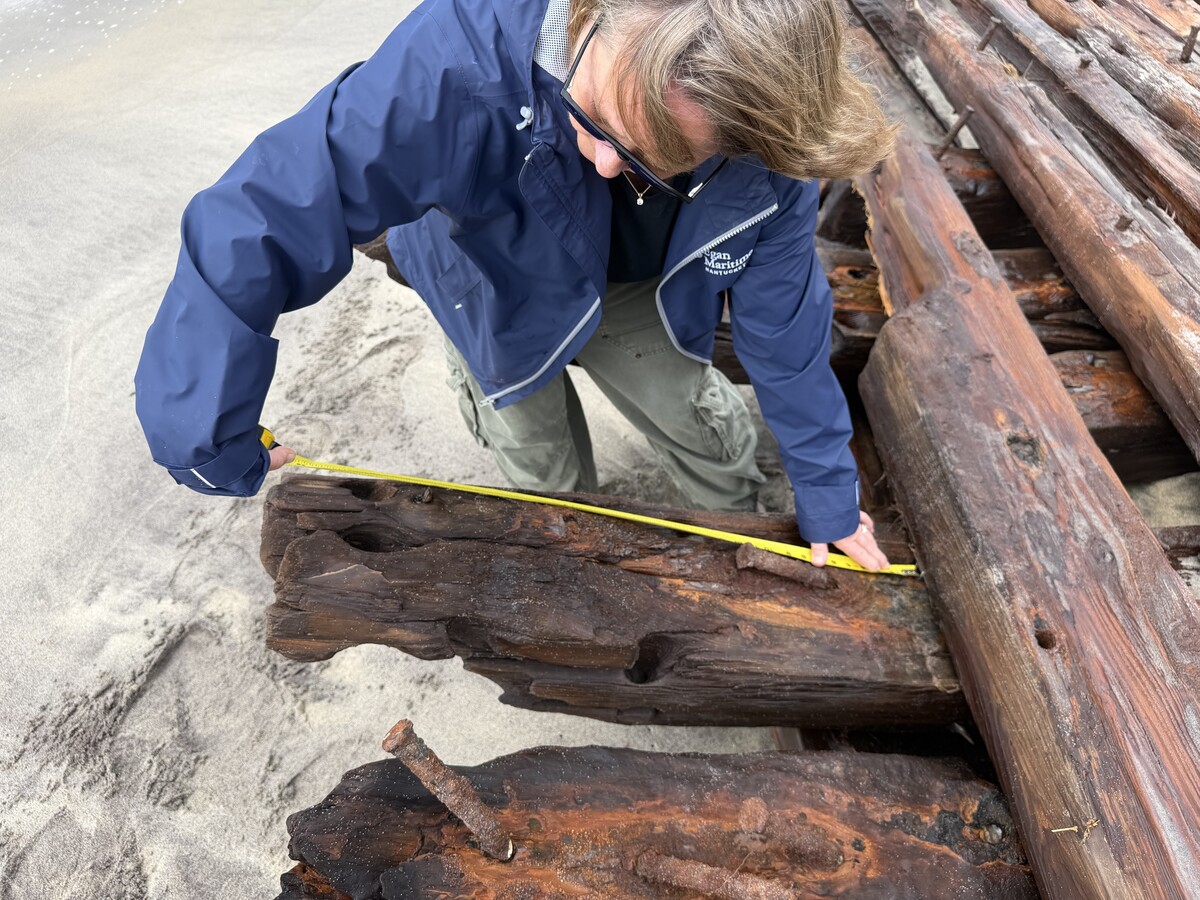
After an in-person site assessment on October 7, BUAR Director and Chief Archaeologist David Robinson determined that the current wreckage does not match the wreckage documented in 2022 and 2023. Based on the vessel's location and the sizes and wood species of the exposed timbers, the wreckage represents a newly documented ship remains. This wreckage appears to be a 50-foot long section of the side of a large merchant vessel dating from the late nineteenth to early twentieth century. Over the next few weeks Egan will continue to collaborate with the BUAR team to attempt to identify the vessel using historical records.
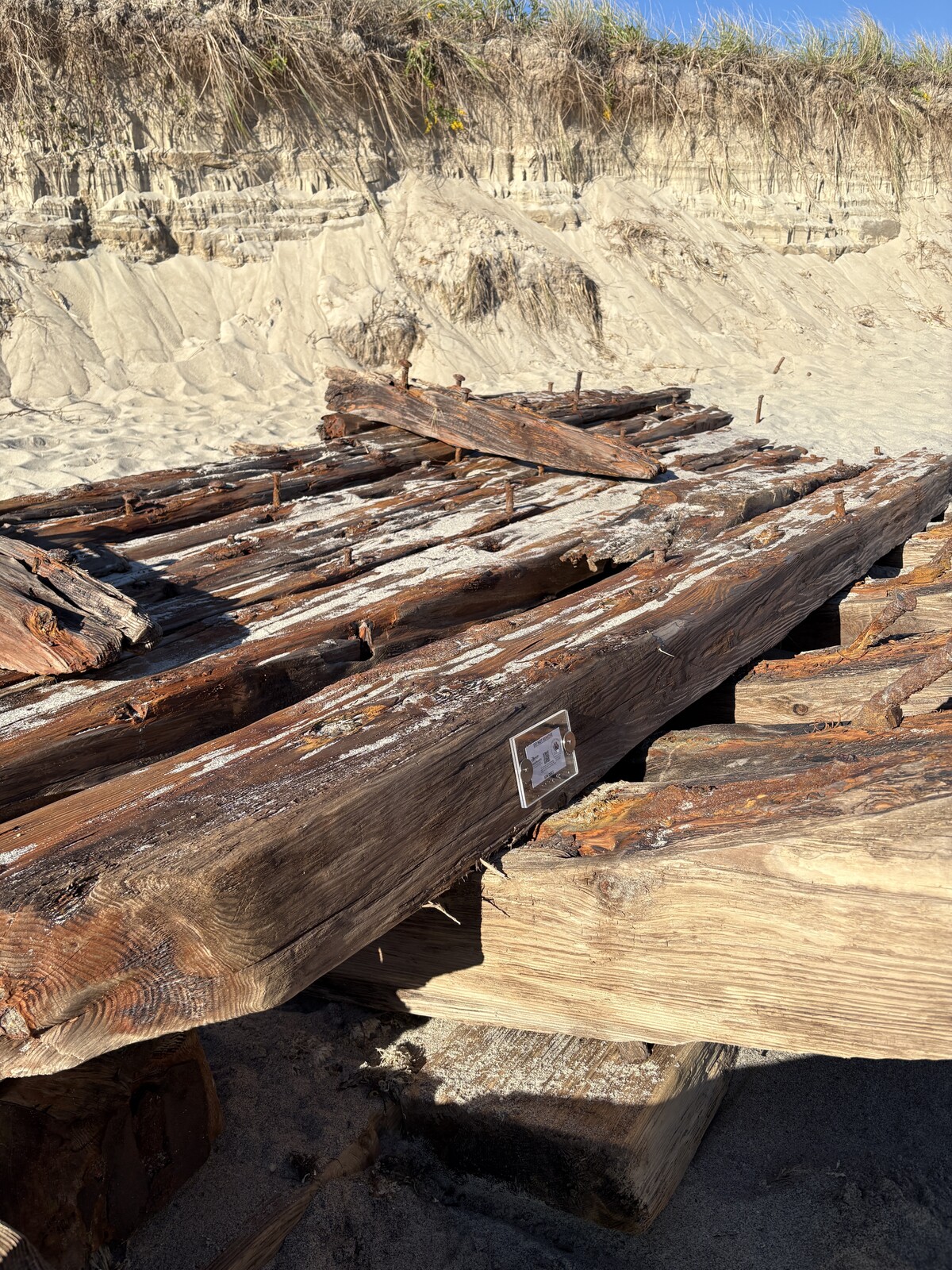
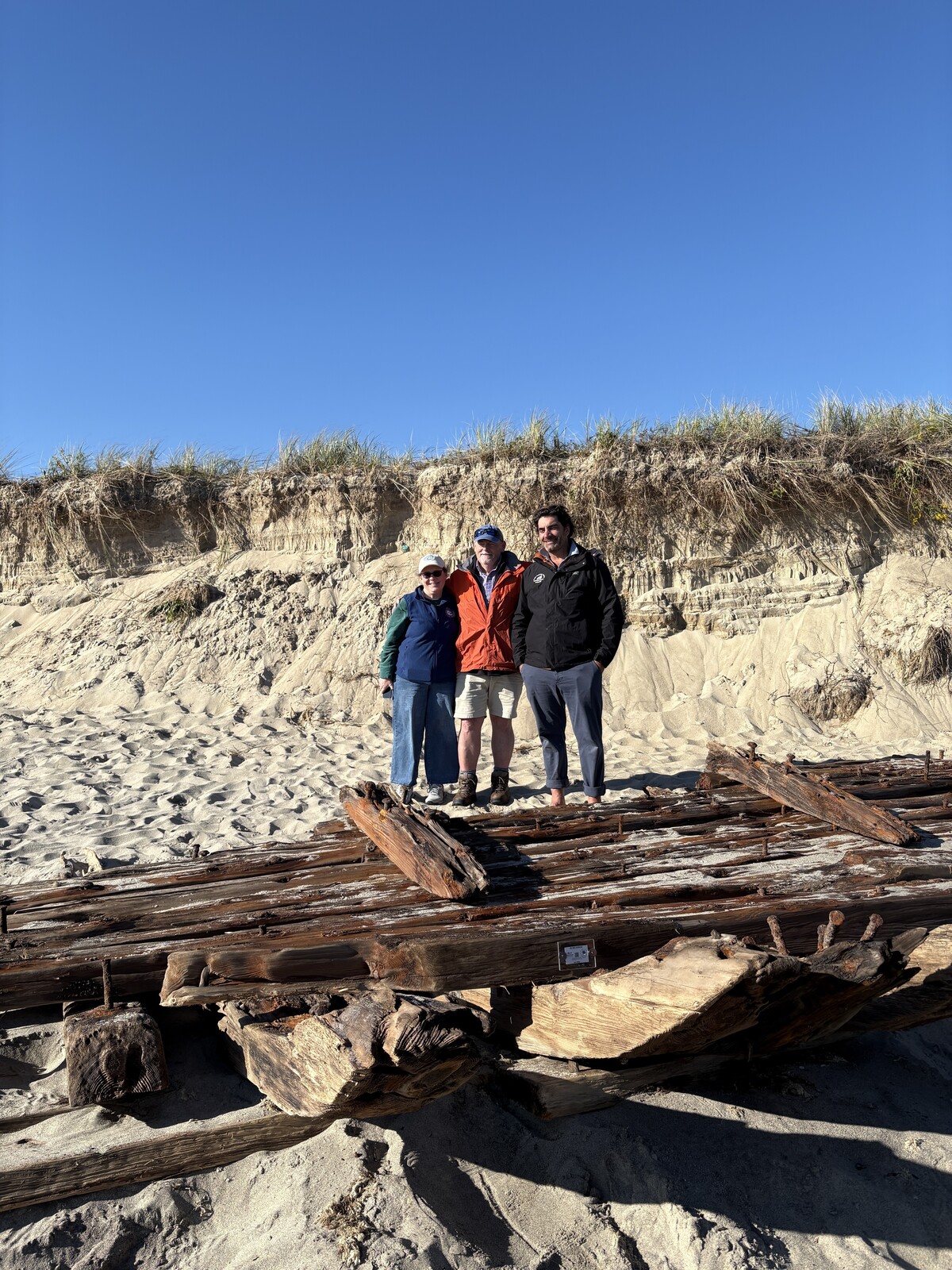
Robinson also affixed a STAMP tag to the exposed wreckage, making it the first site in Massachusetts to participate in the state’s program. BUAR will issue an official statement with Robinson’s findings. Storms, tides, erosion, and other coastal processes can bury, uncover, and shift shipwreck remains, making it difficult to determine whether newly exposed material is connected to historically documented vessel losses and previously documented wreckage. Using STAMP on Nantucket will enable BUAR to monitor wreckage as it emerges and may move along the shoreline.
“STAMP gives us a way to track individual pieces of wreckage through space over time,” Robinson said. “In states where STAMP has been implemented, such as Maryland, there has been an instance that a tagged timber traveling as much as 100 miles along the beach.”
STAMP is a citizen-science program that uses durable, numbered tags with QR codes affixed to shipwreck. The program's goal is for anyone who encounters a tagged timber to scan the QR code with a cell-phone and report its location, condition, and photos to a shared database. These reports help researchers build a record of how wreckage moves and changes in response to coastal conditions. Previously, the only way to report and record a wreck was to use BUAR’s online SHIPS form. The STAMP program makes it easier to record and update this data in real time. Because the STAMP program is a national database, Robinson encourages folks in Massachusetts to keep using the BUAR SHIPS form to record sites with the state.
The Florida Public Archaeology Network at the University of West Florida created STAMP in 2019, and the National Park Service and several states now use the program. In 2026, BUAR began using STAMP in Massachusetts.
“Shipwrecks are part of Nantucket’s physical landscape and an important part of our maritime heritage,” said Carlisle Jensen, Executive Director of Egan Maritime Institute. “With more than 750 shipwrecks estimated in the waters surrounding Nantucket, there is still so much we can learn from these sites. BUAR’s use of STAMP on Nantucket will help us understand how wreckage changes over time and continue to document these pieces of the island’s maritime history as they emerge along our shores.”
Together, STAMP and SHIPs reporting let members of the public and local organizations help identify and document maritime archaeological resources along Massachusetts shorelines. When wreckage or other potentially significant material emerges, submit documentation to BUAR for review and further archaeological assessment.
The wreckage that was exposed by the recent nor’easter is a non-renewable underwater archaeological resource that is state property belonging to all of us. Under Massachusetts state law, removing, displacing, damaging, or destroying underwater archaeological resources is illegal. For this reason and many others, Egan has no plans to obtain a BUAR permit to remove the wreck and reminds the public to please not walk over the wreck, dig at the site, or remove any materials.
About Egan Maritime Institute
Egan Maritime Institute promotes and preserves Nantucket’s maritime traditions. We strive to ensure that our Island’s culture and community continue to be shaped by its seafaring legacy. We achieve this through programs in the classroom, at the museum, and on the water. Learn more at eganmaritime.org.
Important BUAR Links:
BUAR homepage: https://www.mass.gov/orgs/board-of-underwater-archaeological-resources
The SHIPS page: https://www.mass.gov/info-details/buar-shoreline-heritage-identification-partnerships-strategy-ships
Online form for reporting finds: https://www.mass.gov/forms/buar-ships-reporting-form
Egan Maritime Institute Statement on South Shore Shipwreck News
Egan Maritime Institute’s Exhibits and Collections Manager has surveyed the site and has provided a Shoreline Heritage Identification Partnerships Strategy (SHIPS) report to the Massachusetts Board of Underwater Archaeological Resources (BUAR). In the upcoming days, we will work with the state as research continues to identify the wreck, but until then, we cannot confirm the ship’s identity with certainty.
At the moment, David Robinson, director and chief archaeologist for the Massachusetts Board of Underwater Archaeological Resources (BUAR), has reviewed video footage provided for the Nantucket Current and photos provided by Egan Maritime. He assessed that, given the wreckage's location, the most logical conclusion is that it is the same wreck Egan Maritime and BUAR identified in 2022 as partially preserved remains of the wrecked schooner Warren Sawyer. This cannot be confirmed until Robinson can visit the wreck.
The re-emergence of shipwrecks along the coast of Nantucket and the public’s fascination with these vessels speak to the importance of our maritime heritage. Nantucket is one of the “graveyards of the Atlantic,” with more than 750 wrecks estimated in the surrounding waters. Throughout history, the Massachusetts Humane Society, United States Life-Saving Service, and U.S. Coast Guard were instrumental in providing rescue and aid to sailors and passengers aboard these wrecks. Visit the Nantucket Shipwreck and Lifesaving Museum to learn more.
While observing the wreck is encouraged, we remind the public that this is an archaeological site with historical significance. Under Massachusetts state law, it is illegal to remove, displace, damage, or destroy underwater archaeological resources. Do not walk over the wreck, dig at the site, or remove any materials.
In the News:
Shipwreck uncovered on Nantucket shore amid nor'easter storms - ABC
Nor’easter exposes possible 19th-century shipwreck off Nantucket - Northeast Arkansas News
Nor’easter unearths pieces of 19th-century shipwreck in Massachusetts - The Guardian
Possible 1884 shipwreck exposed by nor'easter on Nantucket: "It's still there"- CBS News
Nor'Easter Uncovers Large Shipwreck Fragment On Nantucket's South Shore - Nantucket Current
Storm re-exposes shipwreck on south shore - Nantucket Inquirer & Mirror